
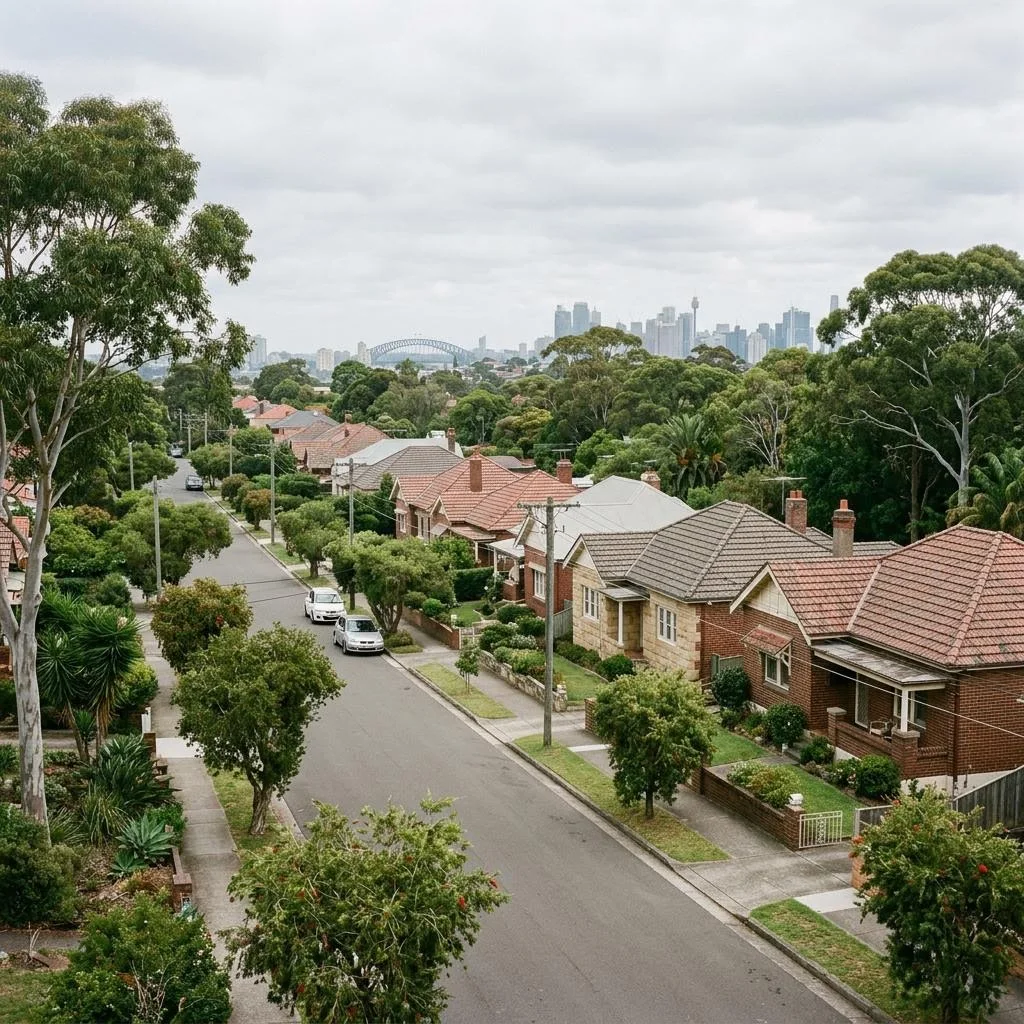
Dane looks beyond the GFC to consider real house-price declines, the differences between Australian capital cities, and what property-cycle risks mean for a financial plan.
Looking beyond the GFC
Have we forgotten what a genuine property downturn looks like?
For many Australian investors, the GFC is their main reference point.
Yet our residential property market came through that period relatively well compared with much of the developed world. The late 1980s and early 1990s tell a different story, particularly in how differently our capital cities performed.
Historical research by Abelson and Chung indicates Melbourne house prices for example fell around 20% in real terms between 1989 and 1996, despite a much smaller nominal decline.
Sydney and Perth also experienced meaningful inflation-adjusted falls, while Brisbane followed a different path.
Different cities, different risks
I expect similar differences between capital cities as the current property cycle unfolds.
Sydney is the market I'm most cautious about this time, given affordability pressures, household debt and sensitivity to borrowing costs.
That doesn't mean other cities are immune, but I don't expect them all to follow the same path. NAB's latest figures show dwelling values have fallen from their recent peaks by:
Sydney: 8.6%
Melbourne: 7.2%
Brisbane: 5.4%
Perth: 6.0%
How the cycle informs our investment approach
My investment approach at Life First Advice draws heavily on the property and credit cycle research of Property Sharemarket Economics, particularly Phillip J Anderson and Akhil Patel. Their research identified this general period as a potential major turning point in the cycle well over a decade ago. I know this because I've been following them since 2013.
It's a key input into the asset allocation strategies I manage for clients, alongside my own assessment of valuations and economic conditions. For the past year or so, we've been reluctant to recommend new investment property purchases because we believe the risks outweigh the potential rewards.
We've also maintained more defensive positioning across our investment portfolios. That doesn't mean I'm suggesting people should sell their properties.
Can your financial plan withstand a downturn?
A family home is primarily a lifestyle decision, while investment property decisions depend on debt, cash flow, tax and individual circumstances.
But investors should consider whether their financial plans can withstand a significant fall in property values, or several years of little growth.
And those risks need to be assessed in the context of each capital city, not simply Australian property as one market.
I don't know precisely where prices will bottom. But I have a considered view about where we are in the cycle, and that view is influencing how we're investing.
General market commentary only, not personal financial advice.
This is general information, not advice tailored to you. Your circumstances matter; speak with an authorised adviser before making a financial decision.
WARNING: General advice only. Readers are advised to discuss, with an Authorised Representative, the appropriateness of each recommendation, together with the general and specific risks of investing having regard to personal needs, objectives and financial circumstances. OF Planning Pty Ltd ABN 42670586400 trading as Life First Advice. Dane Pymble (AR323636) is an Authorised Representative of PGW Financial Services Pty Ltd (AFSL 384713 ABN15 123 835 441). All Rights Reserved.
Other perspectives
Office property: a large discount, but is it an opportunity?
Dane examines the discount on Centuria Office REIT, the risks behind reported property valuations, and whether improving fundamentals could point to a counter-cyclical opportunity.
Read the perspective 02 / Further readingProperty & MarketsAustralian property and the risk beneath the cycle
A comparison with US property history is not a crash forecast. It is a prompt to consider valuation, leverage, employment and liquidity together.
Read the perspective